
We love a creative environment
Issue 14: Notes from the Cinematography of The Invite
As Ayo Edebiri once said: I love movies. I love watching movies. I enjoy the spectrum of everything from try hard films to “bad” movies (I did watch all three Kissing Booth movies in my era of deep depresso psychosis, thank you). But every now and then, I watch a movie or read a book or see a work of art I love so much, it makes me mad. It makes me upset that it’s so good and pisses me off because I know I will never make something as good. (Yes, yes, I have my own “voice” and “experience” or whatever, so it’s fine.)
The Invite is one of those movies for me.
I first saw Olivia Wilde’s third directorial feature over Fourth of July weekend with some of my girly pops, and I then re-watched it twice in the waning weeks of summer (while visiting friends in Charlottesville and then with my boyfriend). In between my first and second viewings, I also attended a Sundance Collab and Dolby Creator Lab session on The Cinematography of The Invite, with Olivia Wilde and Adam Newport-Berra. It was very cool to hear them both talk about the visual language of their film and their creative process.
So much about this film really made me want to make art. I love how beautifully spare the storytelling is, the humor is precisely my particular flavor and Seth Rogen’s laugh is infectious, the Dev Hynes moody cello score slaps, and my eyes were feasting on all the visual details of the gorgeous (single) set.
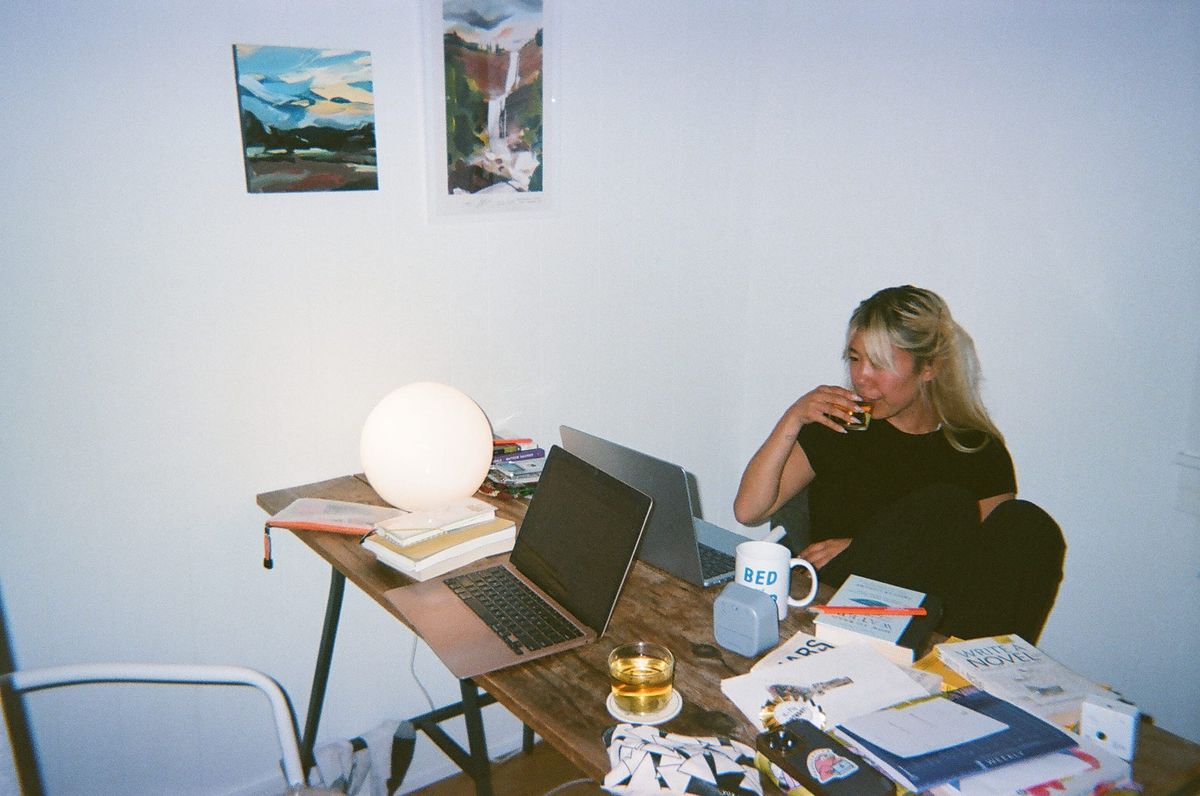
Recently, I’ve been heads down preparing for an upcoming solo art show (!!) so I’ve been very engaged in the act of shaping my creative energy. Unfortunately, unlike Olivia Wilde’s character in The Invite, I have not shaped it beautifully, instead going through the epic highs and lows of my “creative” “process.”
If I have any repeatable part of my “process,” it’s a constant curiosity about various art forms and the way these mediums set up different environments within which art can be created and flourish in.
“You can have your dream movie in mind, but if your movie ends up being exactly like the dream you had before you made it, you haven’t succeeded. Because that is not this process,” Wilde said. “So understand the best thing about this process is the inherent evolution of an idea to something you never could have imagined. Realize the value of elasticity in your creativity and understand that is a part of it.”
I love Wilde’s point that elasticity is necessary to create. It reminds me to revisit the lessons from my acting classes, that play and practice and letting go of ideas is needed for any kind of artmaking.
On setting up a creative environment
Newport-Berra and Wilde emphasized the importance of collaboration in the creative process and setting up an environment for people to thrive in and create in, rather than fulfilling expectations.
One creative constraint was their decision to shoot on film. “There’s something about the film running through the camera that changes the weather in the room,” Wilde said. “There’s something about feeling film that creates a different environment that I think allows for this departure, which sounds very woo-woo. But I think from an actor’s perspective, there’s this sense of suspended reality. It changes everything, it forces people to be a bit more prepared, and there’s this added energy that flows through the scenes.”
“Expectations are the poison of art,” Newport-Berra added. “Know where to be really rigorous, where to be precise and specific, and also where to let go and trust the process.”
On creative references
Newport-Berra and Wilde said there was no shot list (a detailed list of shots and needed camera setups for a production), but they both stressed the importance of references. “Having the energy of the references in the back of my head helped without being overly prescriptive,” Wilde said.
Newport-Berra said it’s important for him to get really specific about what he’s responding to when he looks at references. “The more granular you get, the more you can understand.”
He said early on in prep, it’s important to ask yourself what you’re responding to in the references. “Is it the composition? Is it the look on the actor’s face? Is it the light? Is it this texture? Then you can kind of throw it away because I don’t want to be on set and looking up and down. It’s really just sort of very subconconscious.”
On developing a visual language
Wilde talked about her close collaboration with production designer Jade Healy, crediting her genius in designing Joe and Angela’s apartment (Seth Rogen and Olivia Wilde) to make architecture be a character within the film.
“The kind of mantra from the beginning with her was frames within frames,” Wilde said. “We wanted to use the structure as a kind of representation of boundaries and barriers and all these things, but we didn't want it to feel overly self conscious.”
That idea also carried into how they shot the set in practice, including reflective compositions and an abundance of mirror work. Wilde also notes that by the end of the film, they reveal angles the viewer hasn’t seen before. “So by that point, you hopefully have a different perspective on the characters.”
On framing and blocking
During the “Contentious” scene they screened during the session, Newport-Berra highlighted the choices to frame the shot from over Joe’s shoulder into the other doorframe.
“What we knew is that we had to take you on a journey, even though you were never going to leave that space,” he said. “The idea of staying that wide and over Joe’s shoulder was really to accentuate the distance between them because he is adamant that he will not close the gap. He refuses to do the normal thing, which is to approach Hawk and Pina and make this slightly less painful for Angela. And so we wanted to kind of maintain that distance and make you feel as awkward as possible.”
Newport-Berra also said there were many other choices they made in terms of blocking and framing that was that were designed to make the audience feel uncomfortable. “The way we’re using close-ups and cutting between them is really designed so that you feel a little bit out of sorts as an audience member, and you’re kind of discombobulated a little bit, which is how it feels when you’re in the awkward stage of a dinner party or a gathering where no one really knows how to make conversation.”
On doing something less often
Newport-Berra and Wilde said in general, they focused on using composition and blocking to make the movie feel dynamic. But every once in a while, they used a dolly for camera movement to signify a “chapter turn.” One of those scenes was following Hawk as he’s running across the apartment to help Joe with his back.
“I think when you do something less often, it really can have more impact,” Wilde said. “That’s a great example of that.”
On camera and lens choices
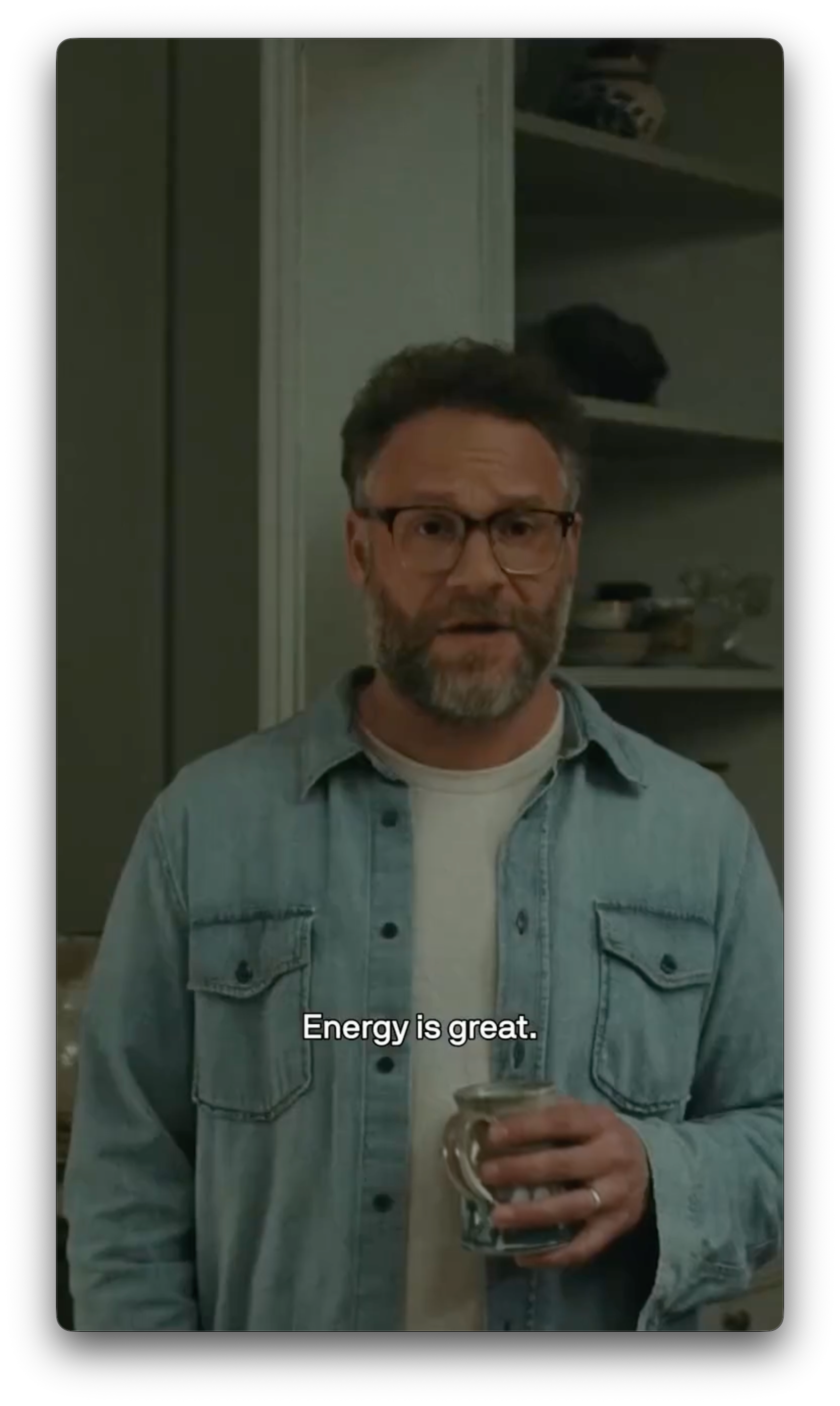
“I feel like the camera has a different relationship with each of the characters in the film,” Newport-Berra said, describing how they shot each of the characters to help convey their qualities and emotional states. “That comes through even in the way they’re framed. You know, Joe and Angela have a disconcerting amount of headroom. Pina and Hawk don’t.”
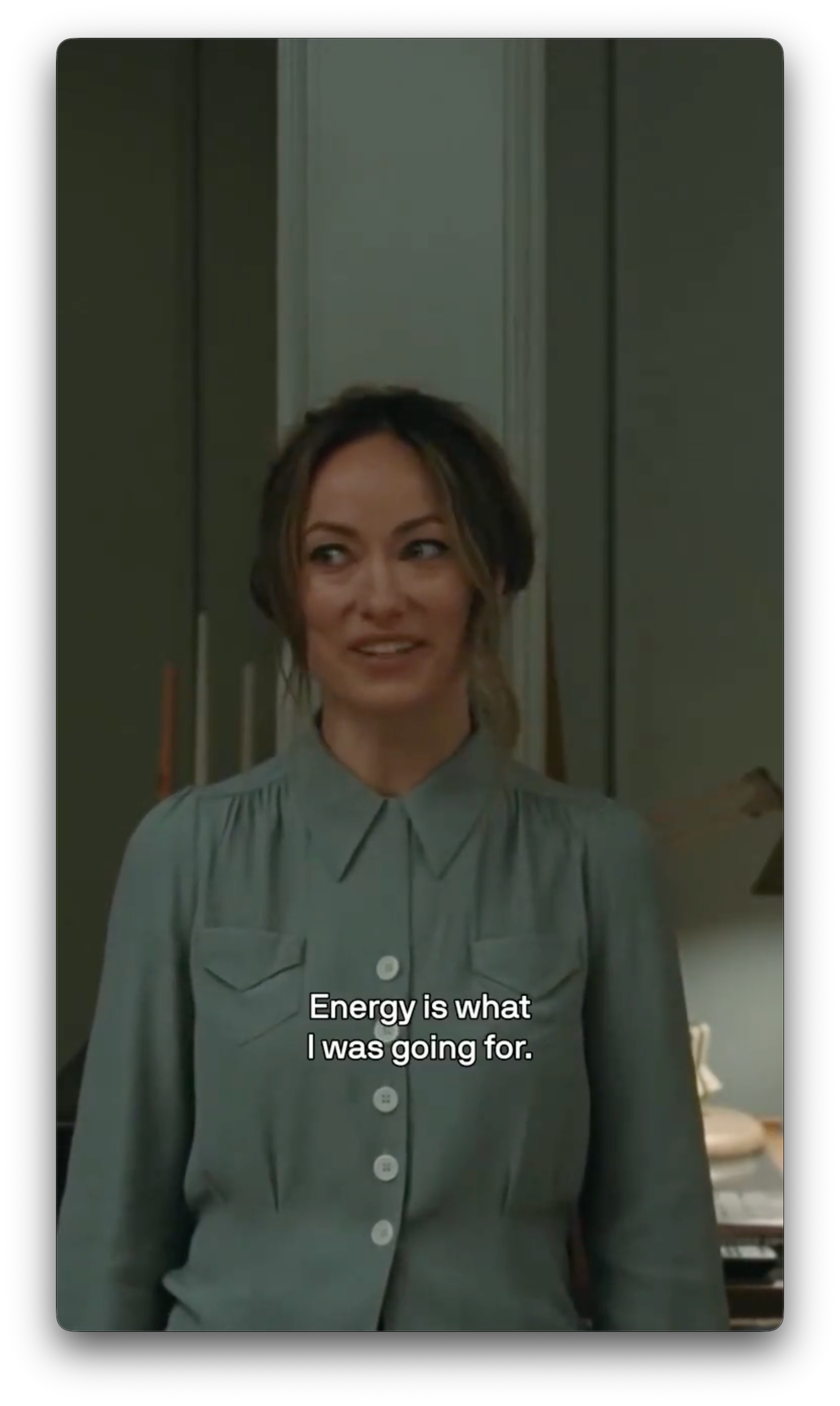
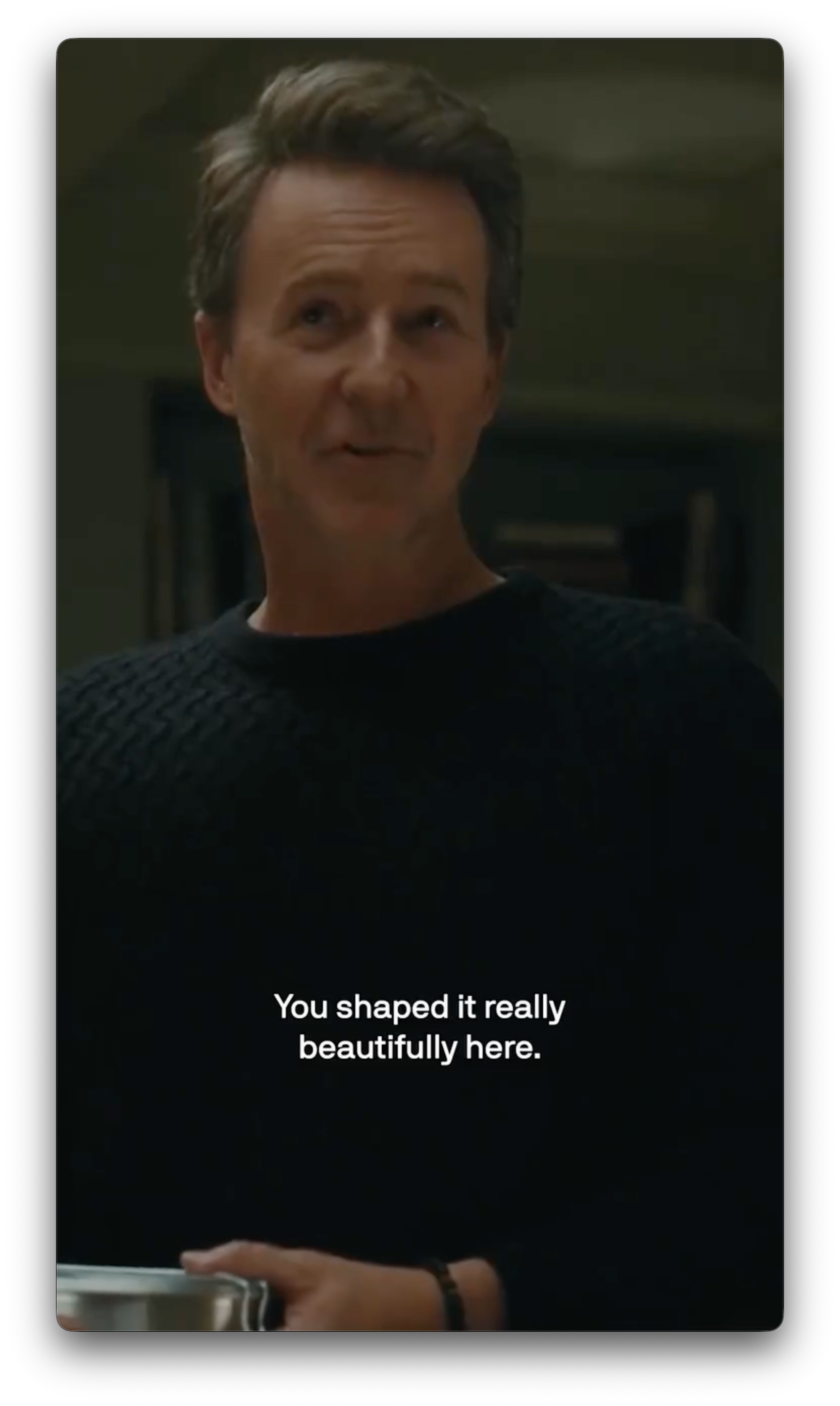
During the “shaping energy” scene discussion, he noted the low angle shot on Hawk (Ed Norton) with a more normal lens. “It feels like you’re kinda standing there with him, looking up at him while he’s speaking, which I think makes him almost sort of heroically cool.”
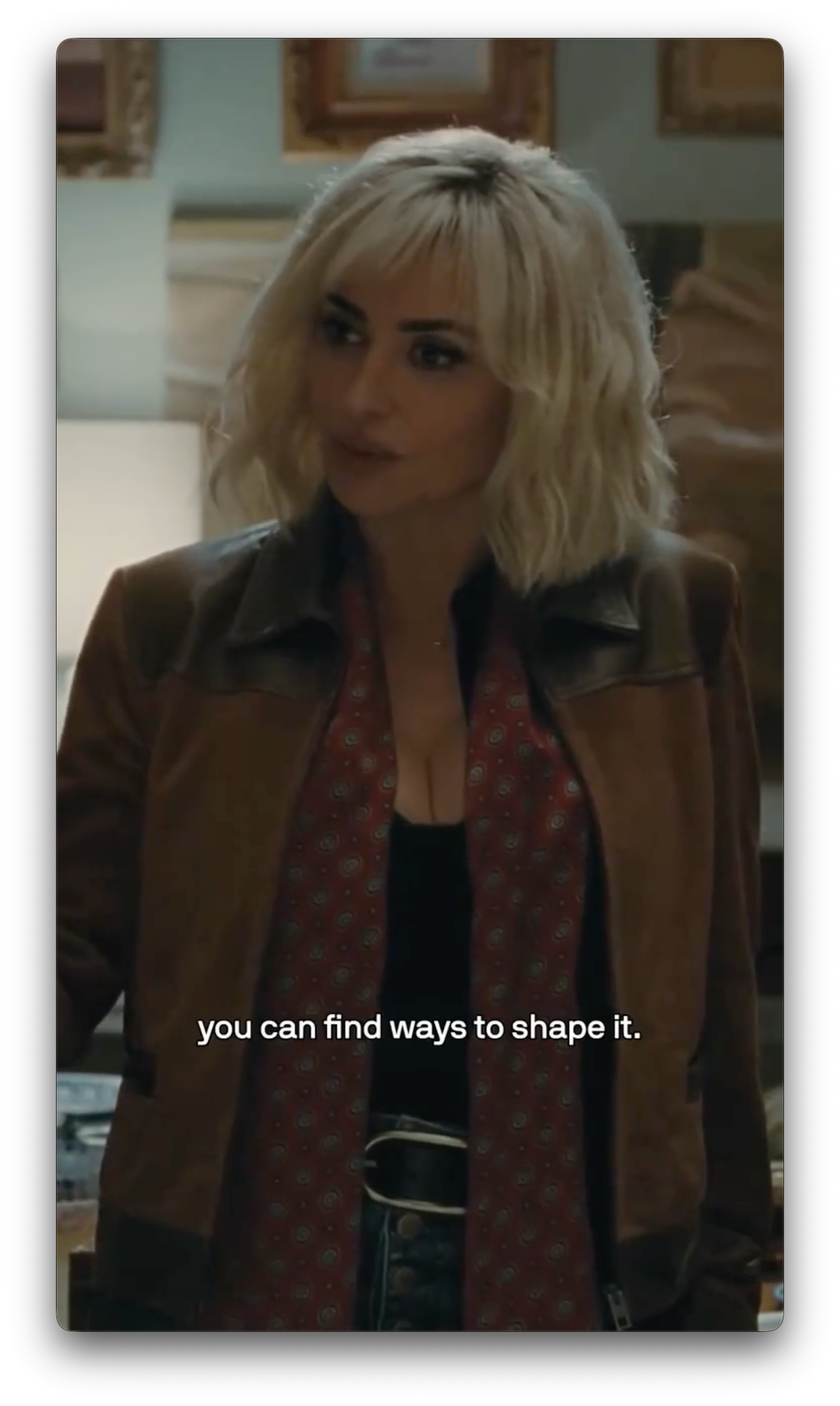
Pina (Penelope Cruz) was the only time they used a Steadicam in the movie (camera stabilizers that isolate the camera from body movement, in order to get a smooth, floating effect). “We wanted her to have this sort of seductive, sexy, sort of more brooding vibe to her,” Newport-Berra said. “By putting the camera on a Steadicam and following her a little more closely, all of a sudden you just felt like there was this energy moving through space that was sort of exploring it and like testing its boundaries, you know? That was really fun to play with.”
In contrast, for Joe and Angela, they used a lot of awkward, straight on shots, usually with a big line going through the frame. “They’re always a little bit off center with a lot of headroom, on a slightly wider lens. So you just get this sense that they aren’t grounded, and they’re a little untethered, and trying to figure out their place even in their own home.”
I loved the way Newport-Berra talked about playing with the contrasts, and consciously choosing different camera and filmmaking tools to achieve an emotional effect for the viewer.
“They’re simple choices, but instantly set the tone for what we’re trying to say about the characters.”
Yours in energy shaping,
katie “poison of art” zhu 🧪
—Ancient Chinese proverb, allegedly
Eye: My place for recounting what I'm seeing — films, art, shows
Hand: Craft section for my writing or art projects
Heart: Essays and vignetty feelings à la Deborah Levy, or trying to be