Perennially perennial

Issue 10: “Can you stretch without striving?”
Even after my 2025 reflections, I was having a hard time finding my word for 2026. How could I follow perennial? Especially when Everything is Perennial, as Charli XCX has said to me personally? Nothing was striking a chord, and I no longer believe in pushing myself to choose a word just for the sake of it. The years where my word has actually mattered and had a meaningful steer on my life, I’ve felt drawn to it, inspired, excited. When I sat down to write my intentions for this year, I discussed and reflected on the following questions with my sister and brother-in-law:
- When did you feel the most joyful and carefree?
- What gave you energy? What drained it?
- What seemed impossible—but you did it anyway?
- What habit, if you did it more consistently, would have a positive effect on your life?
- What did you try to control that was actually outside your control?
I scribbled down the following phrases:
- artfully less
- toss your phone into the sea
- practice/ongoing
- silence and stillness
- creative consistency and “daily-ish”
And then I left it, for a little while. I’m learning that some things take the time they take.
Curating perennial vibes
The first weekend we were all back in the city, my Brooklyn girly pops got together for a “2026 vibe curation brunch” (nobody knows what it means but it’s provocative, it gets the people going). The cool winter light reflected through the floral stained glass windows of Addy’s beautiful new apartment, illuminating her living room with a warmth to match the mirth and effervescence of this group’s reunion.
Over a stunning brunch spread—a DIY taco bar that accounted for the variety of dietary restrictions and taste proclivities of girlies in their thirties (shoutout bean lifestyle)—we contemplated the possibility of the year ahead, planning how we were each going to figure out who we wanted to be by December 2026.
“How do you want to feel at the end of this year?” Jess asked the group. I love the grounded simplicity of her question. Previous years I had taken a more structured, pillar-based approach (god forbid a girl uses a framework) but this was a vibe curation, not an strategic review.
So, how do I want to feel?
I want to continue this new feeling of contentment with my self and current pursuit of my dreams, even in their cloudy, non-specific forms. I want to feel creatively fulfilled, but not through any attachment to rigid outcomes—instead, pushing myself to find fulfillment in the process and consistency of showing up for my writing, and for my art. Most importantly, I want to feel connected with my body and to be at ease in my mind.
I’d like to feel less frantic, maybe do and consume artfully less. I’m continuing to be more intentional about my inputs, trying to lose myself in fewer spirals and scrolling. I want to feel nurtured, enriched, cultivated, I want to tune in to feelings of aliveness and the resonance of the quotidien—the simple enjoyments that come with that form of attention.
I said this to the brunch table, and then Jess leaned forward, a smile tugging at the corners of her mouth. “Can I make an observation?” she asked. I leaned back in turn, nodding as I took a sip of my coffee. “I think your word,” she continued, “is still perennial.”
And you know what? Hell yeah. It clicked. I wasn’t ready to let go of my word, I’m still not done being perennial. Perennial plants definitionally return annually (beyond one year!) to their garden without needing to be replanted. They bring back their colors and textures to bloom in springs and summers, before shedding and wilting through the falls and winters. Much to my friend Nicole’s chagrin, who continues to remark, “I really think you're stretching the meaning of perennial,” I make the rules for my word, and that's on botany. 2026 will be my year of being perennially perennial.
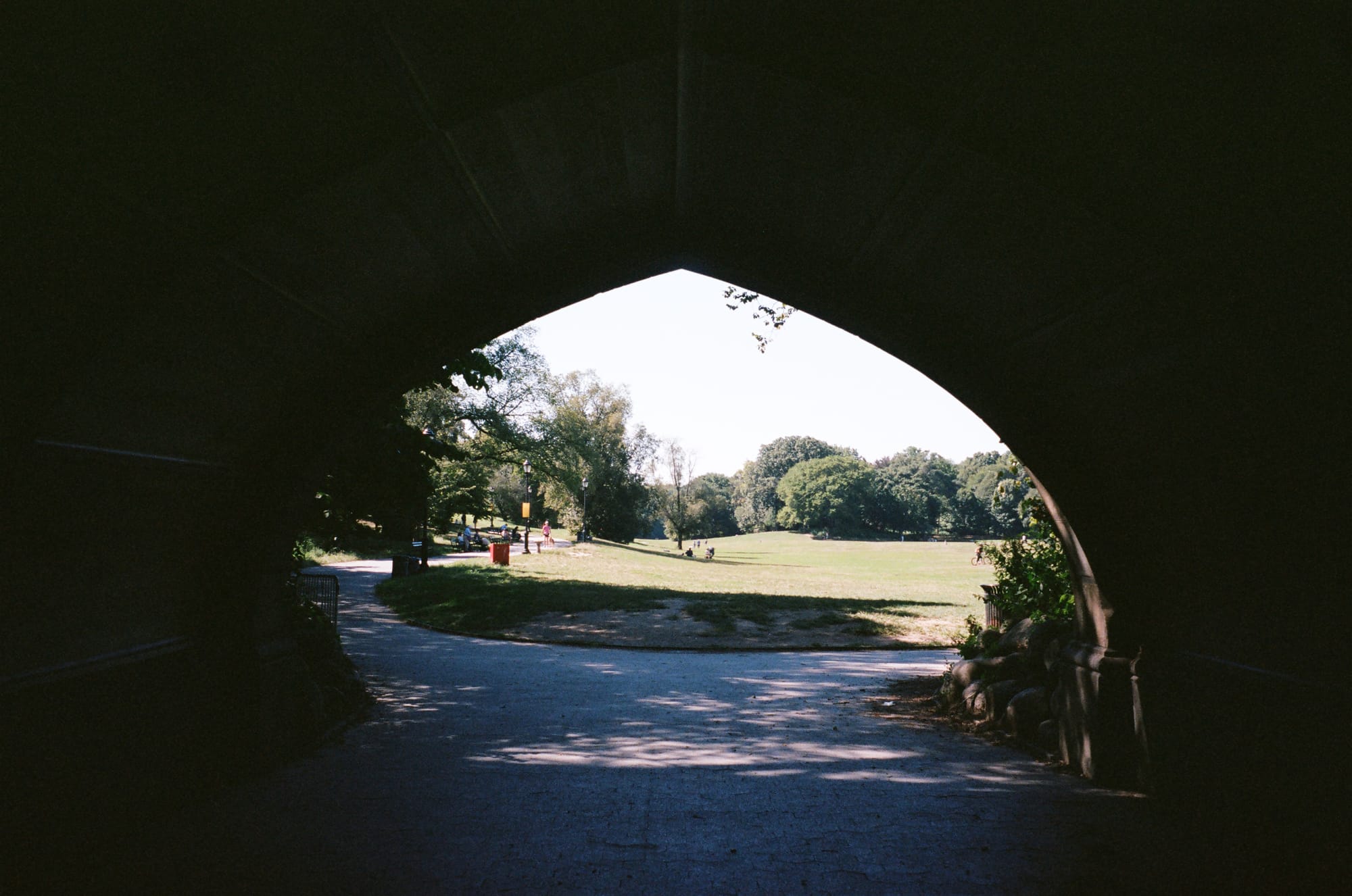
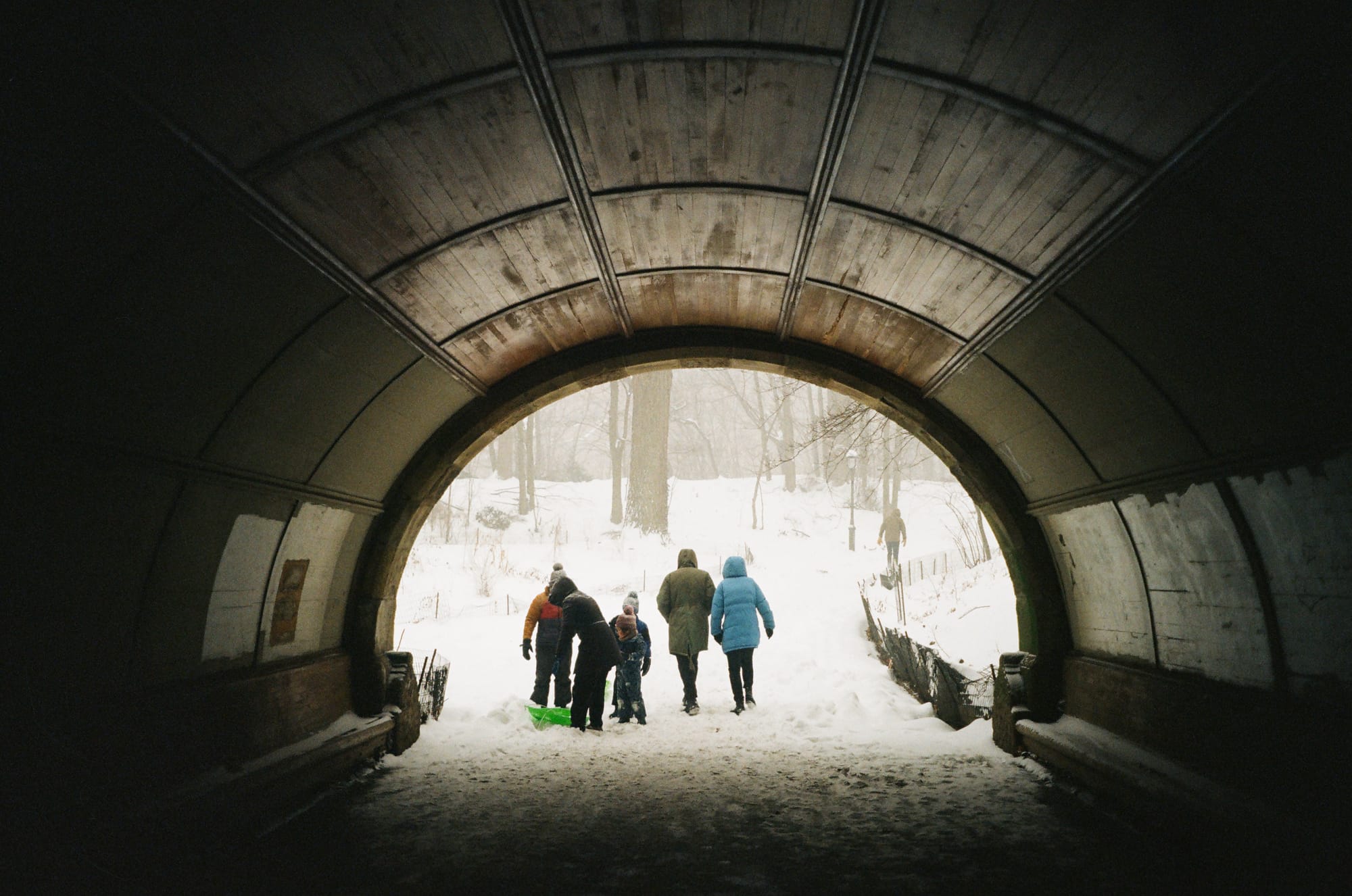
prospect park from fall to winter / Kodak Portra 400
Stretch without striving
“I have to write to discover what I am doing," Flannery O’Connor wrote. “Like the old lady, I don't know so well what I think until I see what I say; then I have to say it again.” This idea of discovering through writing, figuring out what one thinks through the repetition of putting words down on a page, of seeing what you say, then “saying it again” is cyclic, and, permit me to continue to stretch its definition, so very perennial.
Perennially perennial is a practice, it’s ongoing. To me it embodies the seasonality of activities and hobbies, routines and patterns, reminding myself that reflecting and rebalancing is part of the practice.
I’ve started my year inadvertently designing what my friend Bo dubbed the “katie zhu Creative Wellness and Rehabilitation Program”—revisiting both Four Thousand Weeks and Meditations for Mortals (we have to get more Oliver Burkeman in 2026), reading The Habit of Being: Letters of Flannery O’Connor, and working through Mindfulness: An Eight-Week Plan for Finding Peace in a Frantic World (pls let me find it..peace.... shoutout Jess for the rec). Don’t worry, I’m really doing great. I haven’t restarted The Artist’s Way….. yet.
Week three of my mindfulness book focused on mindful movement as a way to anchor into a deeper awareness of your body, posing a direct question that’s stuck with me: “Can you stretch without striving?”
Physically? Mostly no. Mentally? Also no. But emotionally? *checks notes* That’s still a no. My default is to strive, to push myself in pursuit of achievement, because if I’m not making concerted efforts to do something, is it even worth doing? But the thing about these defaults is that they become entrenched over time, hardening into autopilot responses that I forget these pathways were once soft, malleable, and that I (allegedly) have the power to reshape them.
My new therapist (brag) responded to my work woes of the week, asking if there were other areas of my life in which I’m overly accommodating or have a tendency to pick up the slack. I winced at the ghostly wisps of my past relationships and friendships, floating through my mind as if waiting for their cue to enter stage right.
“We fill cracks,” my sister says. “It’s annoying being so competent.”
But this competence and crack-filling (lol) comes at a cost. I pay ever-increasing monthly dues of resentment and bitterness, rarely pausing to ask myself what it would take to downgrade or cancel these subscriptions I don’t remember signing up for. And this, I suppose, is the point: not that I will never not strive ever again in my life, or that there aren’t times or efforts worth that striving. But tuning in—yes, becoming “aware”—of the moments where I am subconsciously following my defaults, and instead being able to pause and ask myself: Do I want to strive for this? Or do I want to stay within my limits, is a stretch enough? How can I move up to and explore the “edges” of a stretch, a difficulty, a challenge?
I’ve started picking fruit (this is so metaphorical).
Picking fruit meditation
My fruit picking meditation is meant to demonstrate the principles of mindful movement, opportunities to “cultivate awareness in even the smallest of movements.” The intent is to tune into really feeling and sensing the after effects of doing each stretch, how even a small movement can linger and feel in your body.
“Imagine you’re picking fruit from a tree just out of reach,” the meditation’s disembodied British voice says. “Feel the stretch throughout your body. Note where the edges are, becoming aware, then letting go of even the slightest tendency to push beyond your limits.”
When I’m doing the body bends in this meditation, I find myself immediately trying to bend further. This idea of bending less, staying within my limits and instead focusing on my quality of attention instead of my degree of movement is a challenge. It’s new.
As I reach up to the ceiling of my apartment to pick my fruit, the meditation asks me to distinguish between my soft edges, where the body begins to feel some intensity, and my hard edges, where my body has reached the limit of what is possible in that moment. I have to remind myself that it is simply choosing for that moment, not forever.
The “invitation” in fruit picking is to stay a little longer near my soft edge, to “find the middle ground between trying too hard and being afraid to stretch at all.”
To accept this invitation, I’m asking myself the following perennial questions this year:
- How might I stay open to possibilities, both creatively and personally? (Continuing to live in my circumstances, I’m always saying this)
- How can I help myself focus and finish certain writing projects, with a bend towards seeing things through and maintaining a specific creative momentum (instead of consistently falling victim to Shiny Object Syndrome?)
- How might I balance routines (writing, painting, friends, etc.) with openness to spontaneity and play?
- How can I let go of rigidity in my schedule and doing too much as the default?
- How can I take more “bold, imperfect action”?
- How might I discern the difference between what I can metabolize into acceptance, versus what will calcify into resentment?
- How can I lean into cultivating things that fit, working towards compatibility, instead of labeling things good or bad, or wholly surrendering to immutable differences?
When I push beyond the hard edges in my interpersonal relationships, I’ve rarely paused to “tune in” to the after effects of that striving, of trying too hard as a default. How can I relate more skillfully to my limits? Being perennially perennial for me this year means learning to make more intentional choices about when to strive beyond a hard edge, when to stretch just past a soft one, and perhaps, when to simply rest in stillness, and choose to confront no edges at all.
Stretch, don’t strive,
katie “I meditate now” zhu 🪷
—Ancient Chinese proverb, allegedly, quoted by two white guys
Eye: My place for recounting what I'm seeing — films, art, shows
Hand: Craft section for my writing or art projects
Heart: Essays and vignetty feelings à la Deborah Levy, or trying to be